


SOUND MONEY, SOUND COMMUNICATION: A Call to Integrity
By Keysa Luna

Introduction
When I envision the beautiful world I want to leave for my children and grandchildren, I see it as imperative that the future be built on a foundation of both sound money and sound communication.
Just as money is a tool to communicate value, so language is a tool to communicate thoughts, ideas, feelings and needs.
Just as money has been corrupted at its core with the manipulated debt-based fiat system, so communication too has been corrupted at its core with language that obscures and distorts meaning.
In addition, both have been levered in such a way as to uphold ‘power-over’ structures that reinforce dominance and control over others, rather than promoting individual sovereignty and voluntary cooperation. Money and language are both tools, and like any tool they can be used to help or to harm.
In this context, two seemingly unrelated systems – Bitcoin and Nonviolent Communication (NVC) – hold the profound potential to transform society by fostering honest markets and relationships.
A Beautiful Bird
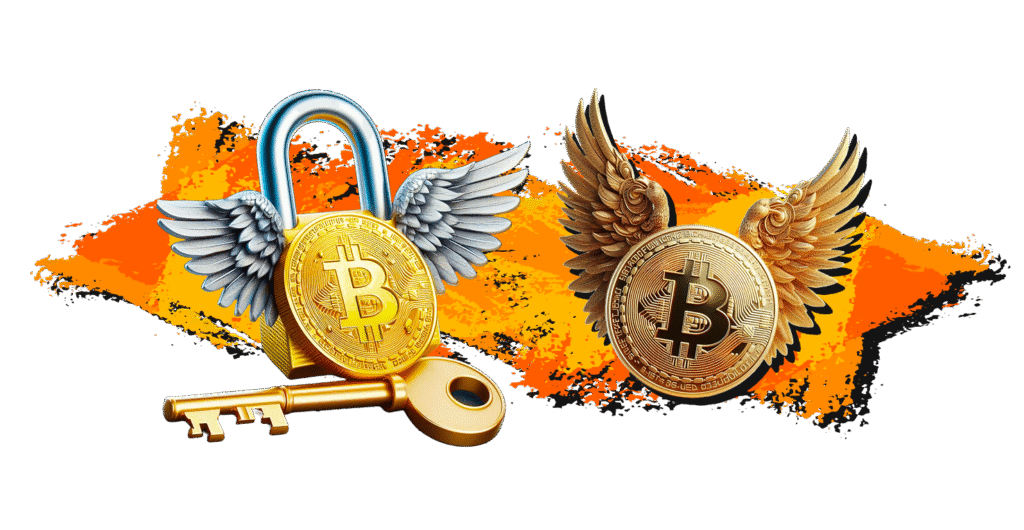
Imagine Bitcoin and Nonviolent Communication (NVC) as the two wings of a powerful bird. Alone, each wing is beautifully designed with function and purpose, yet it is when they are working together that the bird can fly, and ultimately soar to new heights.
Bitcoin, decentralized digital money, empowers individuals to transact directly with whomever they choose whenever they choose, and to store their savings in a sovereign manner where they will maintain value and thus secure the saver’s future.
NVC, a simple yet profound communication process, brings forth honesty, understanding and empathy in relationships.
It is not in any way about restricting language. Instead it is about cultivating awareness and authentic expression of one’s feelings, needs, and requests, along with a willingness to listen to those of the other. NVC creates an environment for genuine connection where both parties can express themselves openly, committed to mutual understanding and peaceful resolution.
When combined, these two systems can create a powerful synergy, allowing individuals and communities to achieve greater freedom, autonomy, and connection, ultimately leading to a more harmonious world, just as a bird’s wings work together to enable flight.
(A Note on Nostr: While I absolutely see Nostr as being essential to free speech and freedom of communication in a digital world, this article focuses more specifically on the language we use, and the intention we hold when we communicate.)
The Distortion of Value and Meaning Lead to Societal Disintegration
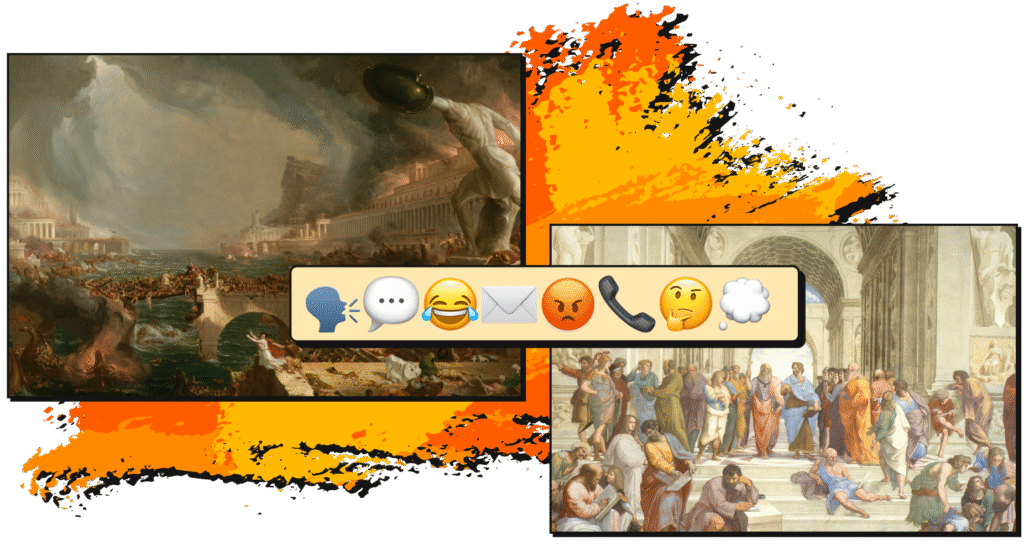
When the system to communicate value is manipulated, accurate pricing of goods and services falters, and the market becomes confused, breeding distrust. This confusion perpetuates further distortion, as individuals struggle to navigate a financial landscape they cannot comprehend or master.
Similarly, when the communication of thoughts, ideas, feelings, and needs is rife with judgments and ad hominem attacks, and devoid of empathy, relationships suffer. Misunderstandings breed mistrust, and people engage in a language game that often becomes a battle, leaving them feeling disconnected and lost. In the worst case scenario, this leads to violence between individuals and ultimately, nations.
This dynamic is evident in our current debt-based fiat monetary system and in our communication methods, even amongst presidential candidates! The longer this persists, the less relaxed people feel, the less creative and adventurous they become, and the more paranoid, distressed, and anxious they are.
Both corrupted markets and broken relationships lead to a cycle of mistrust that ultimately contributes to societal disintegration.
The Power of Language
Ad hominem, blame and shame is the fiat version of language. Using words with the intent to hurt and belittle, leads to disconnection and it breaks, rather than builds, connection. The First Amendment protects free speech, but it does not suggest or endorse violent or abusive language. Similarly, the Second Amendment does not permit wanton violence.
While it is true that we each bear responsibility for our feelings, I argue that when freedom comes at the cost of connection and respect, it undermines the very values that many bitcoiners seek to uphold.
True freedom is not a license to intentionally harm or alienate others; rather, it encourages an ecosystem where open dialogue and mutual understanding can thrive. By prioritizing respect in our communication, we can create a healthier environment that aligns with the principles of integrity and collaboration that Bitcoin itself embodies.
To be clear, I am in no way suggesting that language should be policed. Rather, I am putting forth the notion that the skillful use of language, with a mutually agreed-upon intent to connect, can transform violent communication into understanding, thus nurturing connection rather than destruction.
The 4 D’s of Disconnection and Their Impact
As defined by Marshall Rosenberg, the 4 D’s of Disconnection serve as significant barriers to effective communication, and to honest economies as well.
1. Deserve: In communication, this mindset can manifest as a lack of empathy, where one party believes another deserves punishment, thus making it such that they enjoy being violent towards them. In finance, a similar attitude can lead to exploitation or manipulation, where one party feels entitled to exploit others.
2. Diagnoses: Labeling creates disconnection by reducing individuals to mere categories or boxes, stripping them of the complexity of their humanity. This leads to defensiveness and disconnection, as people feel judged rather than understood. In the context of money, diagnosing others as “wealthy” or “poor” can perpetuate stereotypes and hinder equitable exchange.
3. Denial of Responsibility: This prevents mutual understanding and resolution, as parties resort to blame, failing to take ownership of their feelings, needs, words and actions. In financial contexts, denying responsibility can lead to a lack of accountability, resulting in dishonest practices and eroded trust.
4. Demand: Making demands rather than requests tends to create resistance and defensiveness, leading to power struggles and conflict. In financial settings, unreasonable demands can create an imbalance of power, undermining the principles of fair exchange and mutual respect.
There is Hope: Bitcoin and Nonviolent Communication
Bitcoin, developed by Satoshi Nakamoto, offers a monetary system based on mathematical truth and integrity. It is neutral money, operating on a huge global network of voluntary nodes, ensuring accountability and resistance to manipulation, inflation or censorship by any government or institution.
Bitcoin’s core properties—decentralization, true scarcity, permissionlessness, and immutability—have the potential to revolutionize the global economy by fostering honest markets and removing the problem of having to trust third parties to secure your savings and approve your transactions.
Nonviolent Communication (NVC), developed by Marshall Rosenberg, emphasizes
authenticity and empathy in communication. It recognizes that behind every action lies a fundamental human need.
A Reflection on Communication Styles
In learning NVC, two distinct communication styles are highlighted: the Jackal and the Giraffe. These can also be compared to a fiat vs a sound money system.
Jackal and Fiat: The Language and Currency of Disconnection
- High time preference behavior demonstrated by habitual, impulsive reactions.
- Quick to anger, without considering long-term consequences.
- Results in damaged relationships (and economies), requiring significant effort to heal.
- Similar to excessive quantitative easing and overspending, leading to inflation and debt.
- Using credit cards for immediate desires, leading to stress and the painful consequences of high interest and debt later.
Giraffe and Sound Money: The Language and Money of Connection
- Low time preference behavior, with thoughtful responses to nurture connection.
- Proof-of-work demonstrated in the uncovering of underlying feelings and needs.
- Acknowledging the importance of looking ahead, considering how words and actions impact
the future.
- Similar to sound money that holds long-term value, where savings can lay a foundation for a
secure future.
Note: Jackal thoughts (judgment, blame, shame, guilt) are valuable, as they serve as warning signs, like the red light on the dashboard, prompting us to ‘lift the hood’ and explore underlying feelings and unmet needs. By recognizing these, we can find strategies to meet these needs.
Building Trust Through Integrity and Proof-of-Work
Bitcoiners say: Don’t trust, Verify. This is necessary at the start of a relationship.
I see a relationship as a basket. It starts out with just a single hoop, the initial connection between two people. Over time, each honest interaction acts as proof-of-work adding additional threads of integrity, and the hoop becomes woven into a basket. As trust is built, the basket grows stronger. When times are tough, and one of the partners lashes out, a few threads may be broken, but as long as that is the exception and not the norm, the basket remains strong enough to be rebuilt.
The more trust there is in a relationship, the more we can relax, knowing that the other has our back and vice versa. This allows us to be more adventurous and creative. It becomes a beautiful feedback loop.
As we strive to separate money from state and restore integrity to our financial systems, let us also work to transform our communications, cultivating them to meet our deep needs for connection, empathy, and respect.
Shared Principles
NVC and Bitcoin share numerous valuable fundamental principles as outlined below.
Rules, Not Rulers:
- In Bitcoin, all participants play by the same rules, thus leveling the playing field.
- NVC emphasizes that all individuals share the same fundamental feelings and needs, and promotes power-with rather than power-over dynamics to find strategies that consider all the needs on the table.
Born Out of Pain:
- Both Bitcoin and NVC emerged from the pain inflicted by existing systems.
- Satoshi Nakamoto introduced Bitcoin in response to the corruption of the central banking system, while Marshall Rosenberg developed NVC out of frustration with the disconnection prevalent in language, and the lack of empathy that he realized was responsible for most of the violence between people, groups and nations.
- In addition, it is often through experiencing pain—whether financial or relational—that individuals become motivated to engage in the proof-of-work necessary to learn and apply these tools.
Exchanging Value:
- As Bitcoin facilitates the exchange of value for goods and services—my proof of work for your proof of work, so NVC emphasizes the exchange of authenticity—my honesty for your honesty.
Decentralized Systems:
- Both NVC and Bitcoin rely on voluntary participation and collaboration, allowing for grassroots growth through personal experiences and word-of-mouth. Like mycelial systems, they strengthen as their distributed networks grow.
Proof-of-Work and Low Time Preference:
- Engaging with NVC and understanding Bitcoin requires time, effort, and dedication—often referred to as “proof of work”, demonstrating patience (low time preference) and a willingness to invest in long-term growth rather than seeking instant gratification.
Nonviolence:
- Bitcoin reduces the likelihood of conflict by making war costly, while NVC addresses the root cause of war by offering peaceful communication strategies.
Independence and Interdependence:
- Both concepts emphasize the importance of self-awareness and autonomy (independence), while also recognizing the value and importance of engaging and cooperating with others (interdependence).

Voluntary:
- Bitcoin and NVC are voluntary, opt-in networks. Each of us is at choice regarding whether we are willing to put in the time to learn, understand and use these powerful tools.
Freedom:
- The infinite loop of giving and receiving out of one’s own volition in both transaction and communication fosters a culture of integrity and freedom.
In Conclusion
As demonstrated, the parallels between Nonviolent Communication and Bitcoin are profound. As society grapples with ever more complex challenges, the journey toward a brighter future begins with our commitment to openness and honesty. By adopting NVC principles in our communications, and utilizing Bitcoin for transacting and storing value, we have the potential to revolutionize human interaction, contribute to human flourishing, and to create the future we want for our grandchildren!
Learn more:
- The expanded version of this article is available on Keysa’s website: thesimplestbitcoinbook.net
- Visit cnvc.org for information on Nonviolent Communication
- The Simplest Bitcoin Book Ever Written – 2nd Ed., by Keysa Luna
- Nonviolent Communication: A Language of Life by Marshall Rosenberg PhD
Questions, comments: thesimplestbitcoinbook@proton.me
Book a session with Keysa for Communication and Empathy Skills training, or Bitcoin coaching at: lncal.com/keysa
Note from Stackchain Magazine: No Bitcoin (or inferior monies) were exchanged for this article. This article was written by Keysa Luna, author of “The Simplest Bitcoin Book Ever Written,” a free educational resource and senior editor of Bitcoin Art Magazine. You can find Keysa on X @SimplestBTCBook on Nostr simplestbitcoinbook@nostrplebs.com. If you’d like to send Keysa some 丰 for the article you can do so via LNURL esimplestbitcoinbook@getalby.com