
Bitcoin Through a Boomer’s Eyes: A Decades-Long Discovery
The Only Constant in Life is Change
My name is Dusty Watchman, born in 1952, which makes me a Boomer. To be honest, I was once a Boomer that didn’t understand Bitcoin, but given enough time, all things change. That’s precisely why I now understand Bitcoin, despite rumors that Boomers just don’t get it. Born in Illinois, I barely had time to create memories before we moved down to New Orleans. My earliest memories are filled with the vibrant chaos of Bourbon Street—the vibrant costumes and the soulful sounds of jazz. These memories then took a back seat to more recent memories of the surfers, gangs, and anti-war protestors of California. Riding trolley cars through the French Quarter soon turned into racing my own cars up and down the coast of Cali and inevitably wrapping one around a tree. Not your typical childhood by any means! The one memory that defined my life was that money never came easily and even hard work wasn’t always enough to feel like you were getting ahead. My family wasn’t rich, not by a long shot. We simply moved to where the jobs were in the pursuit of having some savings. I hustled for money just as my father did. Still, it was rarely enough.
Change was inevitable in my life, as we moved from New Orleans to San Pedro, California. My dad found work at the shipyard, which kept us afloat until an accident left him disabled. My family just couldn’t catch a break. My dad turned to the bottle while my mom did her best to hold us together. But no matter how hard she tried, we were barely scraping by. America as a whole seemed to be prospering, but not much of that optimism made it to my home.
In the 1960s, California was a melting pot of wealth and disparity, where some lived in luxury while others barely scraped by. For me, though, it was just another day trying to make a buck to help my family. I fell in with a group of local vatos who looked out for each other. They had their own ways of getting by, and hanging with them led to more than a few bad decisions. Before long, I found myself in and out of incarceration, my bright future looking shorter by the day.
At 17, I figured out a way to make some cash that didn’t involve breaking the law. I started making trips across the border to Mexico, buying cheap goods to sell at the flea market back home. It wasn’t much, but it kept me busy and out of trouble. College wasn’t in the cards; we couldn’t afford it.
Then came Skip, a good friend with a smile always on his face and a scheme always in his head. He got me a job at a restaurant in Palos Verdes, up in the hills where the rich folks lived. That job was my first real glimpse into a world I didn’t belong to. I started as a dishwasher, scrubbing plates before eventually working my way up to assistant manager, but even then, I was just a kid from San Pedro, looking in on a life I couldn’t afford. I was curious how they seemed to be winning the money game, though. For me, money seemed to go as fast as it came.
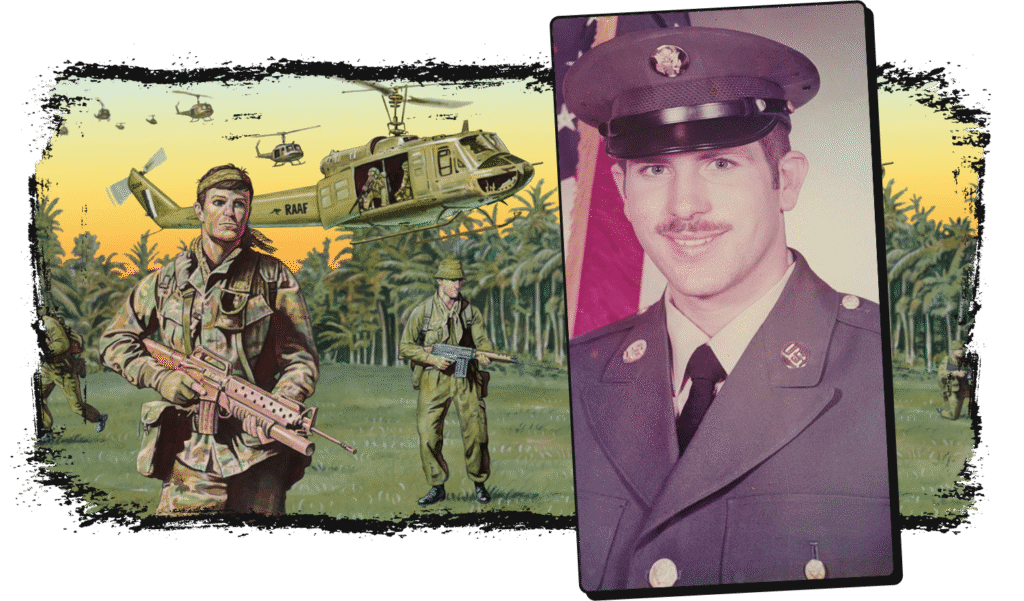
In 1971, the Vietnam War was dragging on. I was 19 when my dad—mentally broken from his disability—handed me a letter. My draft notice.
Military Life and the Changing Landscape of Retirement
I was 19 and life had already hit me with some big responsibilities. I was married with a child, and I needed to get my act together. The military seemed like an idea whose time had come.
I knew the military wasn’t going to be a walk in the park, especially as the war in Vietnam continued to take many young soldiers’ lives. Back then, the promise of a pension for life if you put in 20 years was a powerful motivator…if I could just survive the next two decades.
The world was changing, though, and not necessarily for the better. I watched as companies that once offered lifelong pensions to their loyal employees began to pull back on those promises. Slowly, pensions were becoming a thing of the past for most people. The burden of securing a comfortable retirement was shifting from the employer to the individual, and the need to put your money in risky investment vehicles you didn’t fully understand was becoming the status quo.
In 1974, just a few years after I joined the Army, the Traditional IRA was introduced. Then, in 1978, the 401k plan came into existence. People could no longer rely on pensions to carry them through their golden years; they had to take matters into their own hands. The Roth IRA’s arrival in 1997 was yet another step in this evolution. History has proven time and time again that most people are uneducated and not good at handling money. This was just the beginning of a crisis in the making.The dot com bubble of 2000 and the real estate bubble of 2008 are evidence that most people really aren’t prepared to come out of market downturns unscathed.
Another adverse trend I keyed in on during this same time period was America being involved in conflict after conflict. From Vietnam to the invasion of Grenada in 1983, to airstrikes in Libya in 1986, then to Panama in 1989, and finally to the Gulf War in 1990, it seemed never ending. The government was pouring money into these endless military engagements, while less and less was being given back to the people in the form of benefits. Military pensions were disappearing, healthcare costs were rising, and it seemed like the safety nets many had counted on were vanishing before my eyes.
After 20 years of service, I retired from the military in 1992. I was proud of my service, but I knew I wasn’t done working, and transitioned towards financial planning.
One minor problem. My math skills were about as sharp as an old bayonet. I’d barely scraped by in high school, and after spending two decades in the military, my brain wasn’t exactly wired for the complex calculations needed to pass the certification tests for financial planning. But I wasn’t one to back down from a challenge. I crammed college-level math courses, and I was determined to make this second career a success. I just hoped to never see math again!
The Change From Military Grit to Financial Acumen
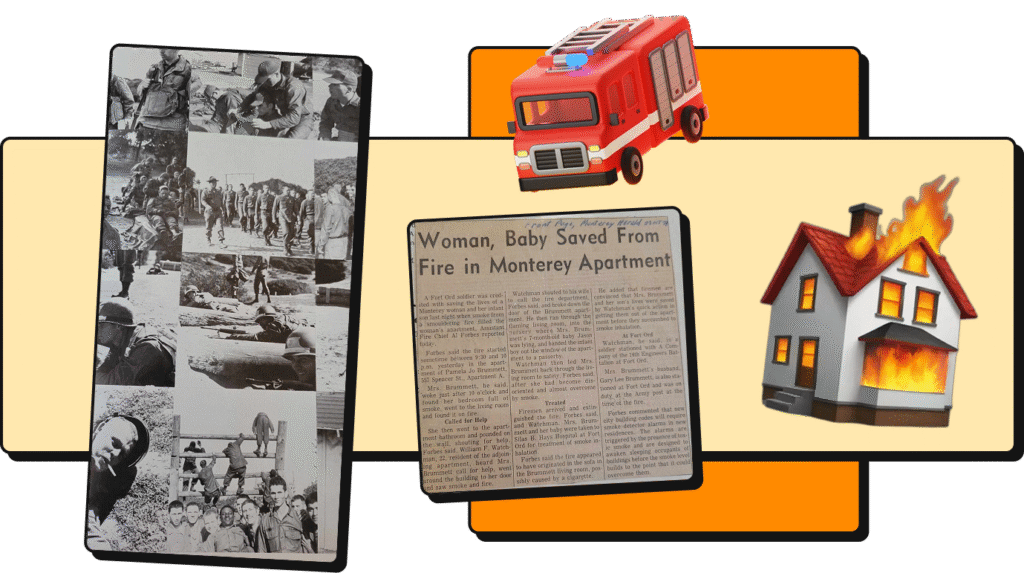
The Army gave me more than just a paycheck – it gave me grit. It taught me how to push through when the odds were stacked against me, a lesson I’d carry with me for the rest of my life. I was 22 when I saved a 7-month-old baby and its mother from a burning house. That moment stuck with me because it showed me what I was capable of. That same determination to accomplish the unthinkable saw me rise to the rank of 1st Sergeant by the time I was 37. I wasn’t going to let a little math stop me.
When I transitioned to civilian life, those leadership skills came in handy, but it wasn’t easy. Adjusting from military to civilian life is a challenge for anyone; thankfully, I had my school-aged boys, Nathan and Dustin, and their mother, who kept the household running. Their support was crucial as I navigated the new world of financial planning, where success relied less on physical strength and more on my ability to crunch numbers and understand complex financial vehicles. It was all Greek to me!
I didn’t want my boys to struggle with money the way I did growing up. My father never taught me about money because we didn’t have any, but I made sure to teach Nathan and Dustin everything I learned. They listened, but as the years went on, the teacher became the student. The financial industry had progressed into more than I could fully comprehend post-2009.
Boomers witnessed the rise of digital money long before most people even knew what it was. Visa created the first debit card in 1975, and MasterCard followed in 1983. But it wasn’t until the late 1980s and 1990s, with the rise of internet-based companies and flashy new websites, that people really started to understand the concept of how money could be exchanged using computers and technology rather than paper bills and coins. It took a few decades for debit cards to catch on, but by then, it was clear that the way we transmitted money was forever changed.
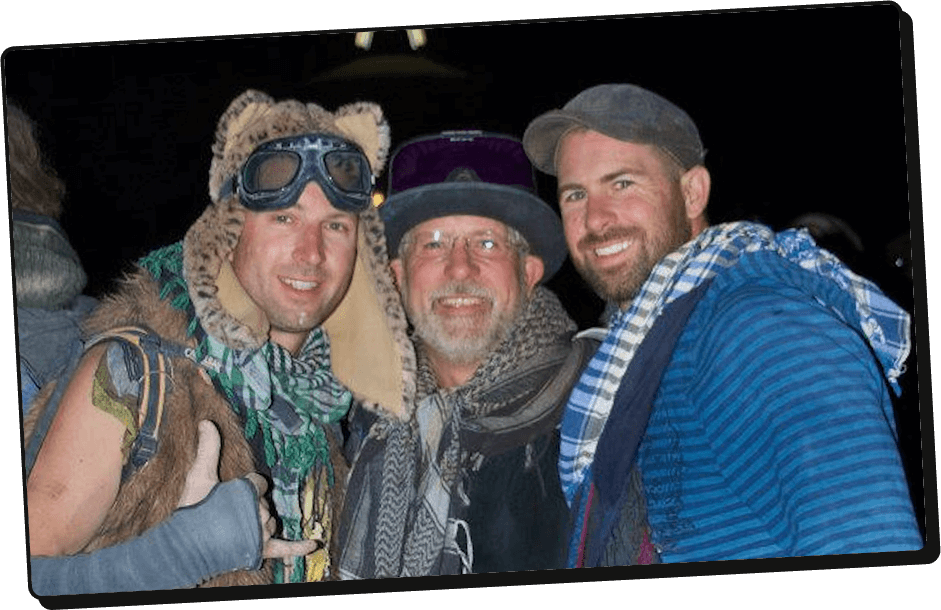
In 2009, Bitcoin was released, and for years, it flew under the radar. It wasn’t until around 2017 that ordinary people—my son, Dustin, included—started to take notice. By then, my son had been living abroad for six years and had seen firsthand how Bitcoin was revolutionizing the way money moved around the world. He explained to me that just as travel agencies had been replaced by the internet, traditional currency exchanges in airports and tourist spots could eventually become obsolete because of Bitcoin. The need of exchanging currencies with each new destination was just one of many problems that bitcoin potentially would solve.
At first, I was skeptical. I was an older Boomer by then in my late 60s, and I couldn’t imagine the government allowing privatized money to exist for long. But my son was persistent. He explained how Bitcoin worked and how it could potentially offer a solution to the problems caused by government overspending. I saw his passion, and slowly, I began to see the potential from a different angle. There was no CEO or leader to arrest, no single point of failure that the government could shut down. This was all new to me and my decades of being a financial planner had put blinders on me. Decentralization of money was nothing I had ever heard of before. Even with my rudimentary level of understanding, I couldn’t shake my skepticism.
Bitcoin and the Changing Future of Retirement
As I got older, my experiences started to shift the way I viewed the world. My life had been shaped by the idea that if you did right by your country, your country would do right by you. But as the years went by, I began to see cracks in that foundation. The middle-class was quickly shrinking.
The U.S. government’s increasing national debt was a huge red flag. By 2024, the government was going $1 trillion further into debt every 100 days, and it seemed like no one was willing to face the hard truth. I couldn’t help but think back to the financial booms and busts I’d witnessed over the decades. It was clear that something had to give.
Many Boomers like me were now facing an uncertain future. The pensions we’d once counted on were gone, replaced by 401k plans, IRAs, subprime mortgages and other creative instruments that fluctuated with the market. That’s when Bitcoin started to make sense to me. The more I looked at the state of the world, the more I realized that the systems we’d built our lives around were changing.
My son’s arguments started to sink in as year after year he continued to show me global Bitcoin adoption and growth. I started to see it as a hedge against the instability I feared was coming. Other Boomers didn’t have the risk appetite for Bitcoin and that’s what has stopped many from any attempts to understand it. For many Boomers, owning real estate was even becoming too much work to maintain. They longed for the simpler times when a pension and Social Security were enough to guarantee a comfortable retirement. But those times were gone. The need for change was inevitable.
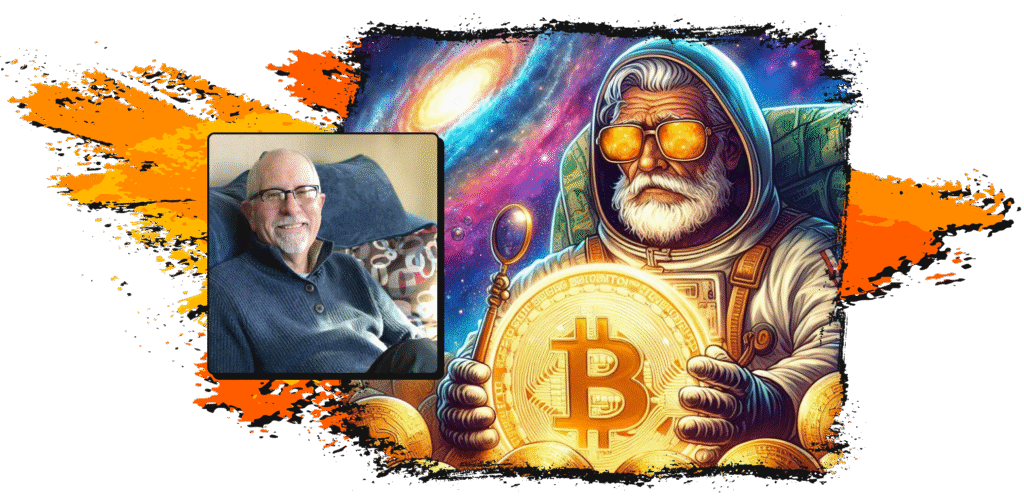
As I moved deeper into retirement, I saw Bitcoin as a way for people like me to stretch their retirement savings further, to take control of their financial future in a way that felt meaningful and empowering. I don’t expect to be around long enough for the full revolution, so Bitcoin has a much shorter timeline in relation to my personal goals.
A Changed Boomer’s Reflection on the Future of Money
By 2024, it’s hard to ignore the skyrocketing national debt. For someone like me—a disabled veteran who served this country for decades—it’s heartbreaking to see the trajectory we’re on as a nation. We fought for a prosperous America, a place where hard work and dedication paid off. But today, it seems like those values are slipping away.
As I look back on my life, I see a series of changes and trends that span decades in the making. Bitcoin is just the latest chapter in that story. For Boomers, it’s a means to an end, but it’s also a symbol of something bigger. It represents a shift in the way we think about money, about security, and about our future.
So here I am, a Boomer with a past full of fond memories and a future that’s still being written. I don’t have all the answers, but I know this much: the world is changing, and if we want to survive, we need to change with it. Boomers have figured out the internet with a little help from others, and the same can be done for Bitcoin; even if its foundation is based on math, we are capable of understanding it. We just need a little extra help from others.
Many Boomers proudly served and fought on the front lines with guns and grenades to secure a free and prosperous America. Now, it’s time for us to pass the torch to the younger generations. It’s their turn to step up and fight hard to restore the America we’ve cherished—one that’s free and thriving. And today, Bitcoin is the number one contender to make that happen.
Note from Stackchain Magazine: No Bitcoin (or inferior monies) were exchanged for this article. This article was written by Dusty Watchman, a Bitcoin enthusiast and author focused on promoting Bitcoin adoption, the Lightning Network, family and community empowerment. You can find Dusty Watchman on X @dustinwatchman . If you’d like to send Dusty some 丰 for the article you can do so via LNURL dustinwatchman@strike.me