

Bitcoin third spaces by Zach Wischler and Wyatt O’Rourke
Why Third Spaces Matter to the Bitcoin Community
Bitcoin is described as a permissionless protocol in the Whitepaper—a network where math replaces middlemen and sovereignty replaces
dependency. But behind the code and cryptography, Bitcoin is ultimately powered by people who voluntarily abide by its rules. Its strength lies not just in its code but in a global network of individuals who share a vision for freedom and sound money—and work together to make it a reality. While nodes and miners keep Bitcoin running on a technical level, it’s the community—developers, educators, advocates, and enthusiasts—that drives the movement forward. For a niche community like ours to thrive, it needs more than just a shared ideology—it needs real-world spaces where people can connect, not just online, but in person. These “third spaces” are physical environments beyond home and work where meaningful relationships take root. For Bitcoiners, third spaces are more than just meeting places; they are the backbone of our movement and the launchpad to hyperbitcoinization.They’re where ideas are exchanged, skills are sharpened, collaborations take shape, and the collective strength of the movement is forged. The problem? There aren’t nearly enough of them.As founding chairman of The Space,I’ve seen firsthand the transformative power of a dedicated third space for Bitcoiners. Alongside Wyatt, our Chief Marketing Officer, and others in our community, we’ve cultivated an environment where education and real human connection collide—and the results speak for themselves. Running a member-driven,nonprofit Bitcoin hub has given us deep insights into why third spaces matter.That’s why, in the spirit of Bitcoin, we’re open-sourcing our playbook—sharing exactly how we took our organization from zero to one. And it’s already happening. Our work has helped Bitcoiners in Scotland and the Northeastern U.S. prepare to launch their own third spaces. Bitcoiners helping Bitcoiners—does it get any better than that?
Now, let’s explore why these spaces are so essential—especially for a decentralized, digitally native movement like ours—and how they’re shaping the future of Bitcoin in real time today.
What Are Third Spaces?
Sociologist Ray Oldenburg coined the term “third spaces” to describe essential “anchors of community life.” These are neutral gathering spots, free from the obligations of home (the first space) or work (the second space). Think of the neighborhood café, the local library, or the park where strangers meet weekly for a chess game. These spaces foster interaction, creativity, and a sense of belonging. Before modern technology, third spaces were critical for community building. Town squares, fraternal lodges, and local clubs formed the social infrastructure that held communities together. But in recent years, as our world has become increasingly digital,our real-world connections have suffered. At first, this shift seemed like a natural generational preference. The same people who once gathered at local halls were followed by a generation that increasingly engaged in the digital world for work and socialization. Because communication was becoming more convenient, the absence of third spaces wasn’t immediately felt. However, the COVID pandemic changed everything. When in-person interaction was forcibly restricted, the value of real-world connection became undeniable—and was sorely missed. For Bitcoiners—a global, decentralized, and contrarian community—the need for third spaces is uniquely pronounced. We first connect online through online forums, X debates, Telegram groups, and Discord communities, etc., but these interactions can’t replicate the depth of face-to-face conversation. There’s something irreplaceable about sitting down with someone who shares your passion and worldview, hashing out ideas over a drink, and building strong real-world connections that last through halvings.
Third spaces bring Bitcoin to life in a way that group chats never will.
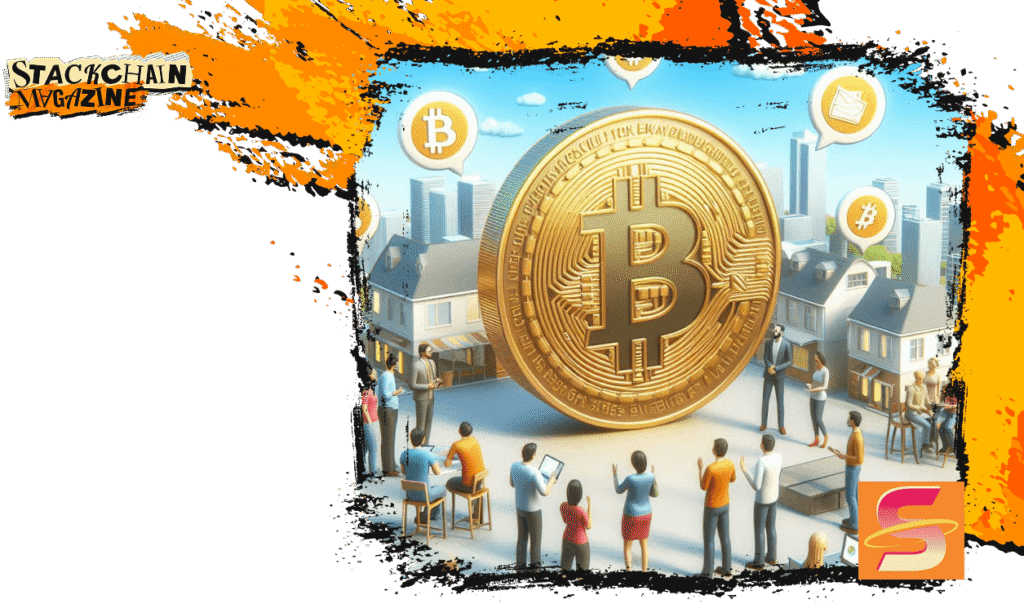
Bitcoin’s Need for Physical Connection
Bitcoin is the ultimate antidote to centralization and dependency. But decentralization doesn’t mean isolation. In fact, the opposite is true—Bitcoin flourishes when people collaborate. Sure, nodes validate transactions independently, but they still rely on the collective strength of consensus with the rest of the network. Similarly, Bitcoiners thrive when they’re part of something bigger than themselves. Without a dedicated user base, Bitcoin would be nothing more than an abstract idea in a whitepaper. Yet today’s work-from-home culture makes this harder than ever. The lines between work and personal life have blurred, leaving many feeling untethered. For Bitcoiners—who are naturally individualistic and perhaps even nomadic—this isolation can feel even more real. Online communities help, but they can’t replace the bonds formed in meatspace. Bitcoin is, after all, inherently peer-to-peer. It is a decentralized, open-source protocol designed to remove middlemen and eliminate the need for trust. But just because we can verify and trust our money in a decentralized manner doesn’t mean that approach works best for all aspects of life. Humans are not just technological beings—at least, not yet; they are social beings. A return to in-person interactions will foster stronger communities and a more connected society. This is why third spaces are so vital. They provide a neutral ground where Bitcoiners can meet, learn, and grow together. These are places where contrarian ideas are welcomed, collaboration is celebrated, and even tough questions can be asked—without fear of judgment. Third spaces transform Bitcoin from just internet money into the foundation for a new economy and community.
Ironically, shitcoin projects have been much better at organizing in-person communities. They’ve managed to reach developers, users, and markets much faster than Bitcoiners, giving them an undeserved advantage in the physical world. Luckily, Bitcoin is fundamentally superior and has a head start. But this should serve as a wake-up call—if we care about Bitcoin’s future, we must invest in real-world communities where Bitcoin will be adopted and used—not just in digital spaces.

The Space Denver: From Meetup to Movement
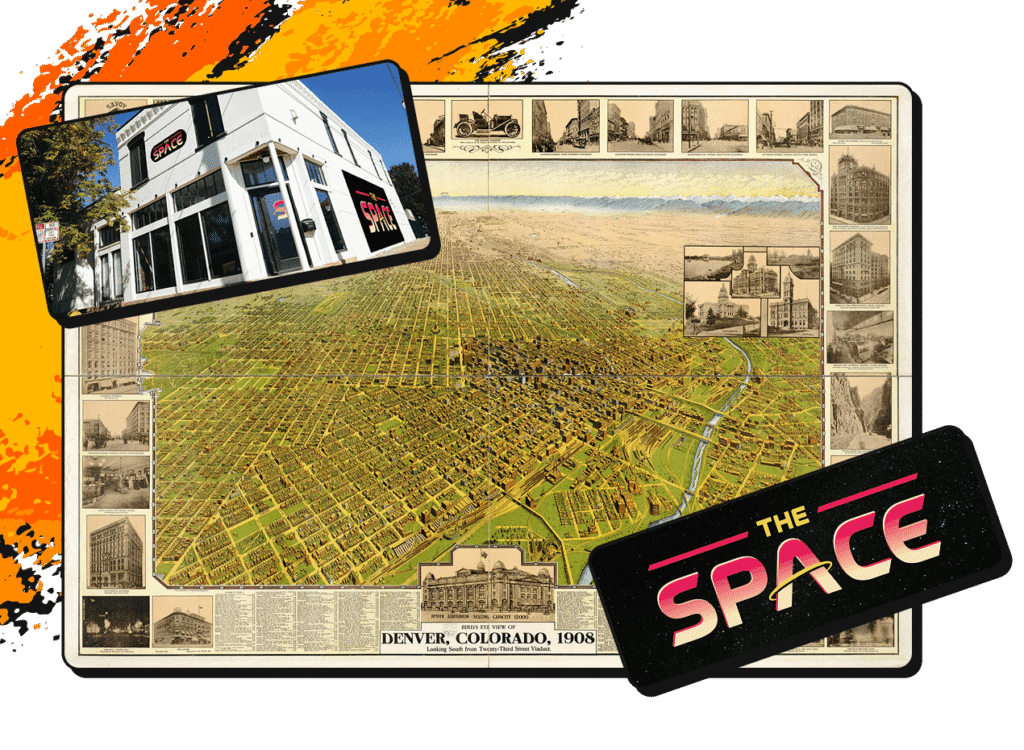
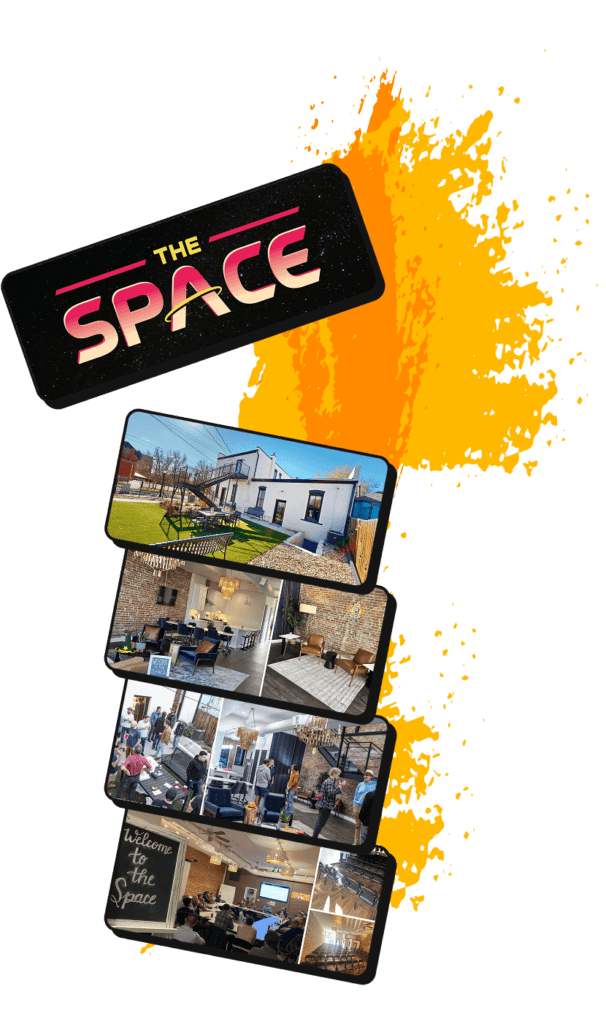
At The Space Denver, we’ve witnessed the power of third spaces firsthand. What started as Denver BitDevs, a recurring meetup, quickly outgrew its original scope. The conversations were too engaging, and the energy and attendance too high, to be confined to just a few hours each month. We needed something more—a dedicated space where Bitcoiners could gather regularly, knowing they’d find their people, opportunities for collaboration, and the resources to bring their vision of the future to life. The Space has quickly become that hub. It’s not just an event venue—it’s a Bitcoin citadel where developers draft BIPs, miners discuss optimizing large-scale operations for efficiency, and educators share tools to onboard the next wave of adoption. It’s a social club, coworking space, education center, and professional network all in one. Thanks to our generous sponsors, members, and supporters, The Space remains a self-sustaining, community-driven organization—free from central control—that evolves alongside the people who make it thrive. Community-building might seem obvious to boomers, but millennials and Gen Z are often disconnected from it. Modern society has eroded—or outright destroyed—traditional communities and replaced them with algorithm-driven online interactions. The reasons are complex, but the result is the same: many people feel adrift, isolated, and lacking a true sense of belonging. The Space is the new cultural center of the countercultural community. And communities like ours don’t just form by accident—they require proof-of-work. Ambitious individuals must step up, harness their skills, delegate, and build something out of nothing. When that happens, others rally to the cause, forming a network of Bitcoin builders, day-trading dreamers, and proof-of-work doers.
A Call to Build Together
As Bitcoin adoption grows and societal culture fractures, third spaces for Bitcoin will become increasingly critical. They will be the launchpads for future Bitcoin communities—places where the next generation of sovereign individuals finds its footing and where relationships that may define Bitcoin’s future take shape. Balaji Srinivasan’s Network State concept challenges us to redefine and reclaim our communities, block by block. It’s up to us to build these parallel systems—through grassroots efforts, real-world action, and collaboration with like-minded individuals. No single person can do it alone, but together, we can create something truly transformative. Bitcoin is more than a trustless, peer-to-peer protocol—it is a movement powered by real people and real relationships, working toward a better future. In a world of infinite noise—where algorithms dictate what we see, and online interactions are engineered for engagement, not truth—third spaces are where we find the signal.
So let’s build them—while we still can.
Note from Stackchain Magazine: No Bitcoin (or inferior monies) were exchanged for this article. This article was written by Zach Wischler and Wyatt O’Rourke from Space Denver. You can find them Zach on X @BTCBap and on Nostr zach@denver.space and Wyatt on X @wyattorourke_ and on Nostr wyatt@denver.space. If you’d like to send them some 丰 for the article you can do so via LNURL for Zach or Wyatt