



58K Chronicles: How I Co-Conspired To Suppress the Bitcoin Price

Chapter 1: The Origin of the Suppression Plot
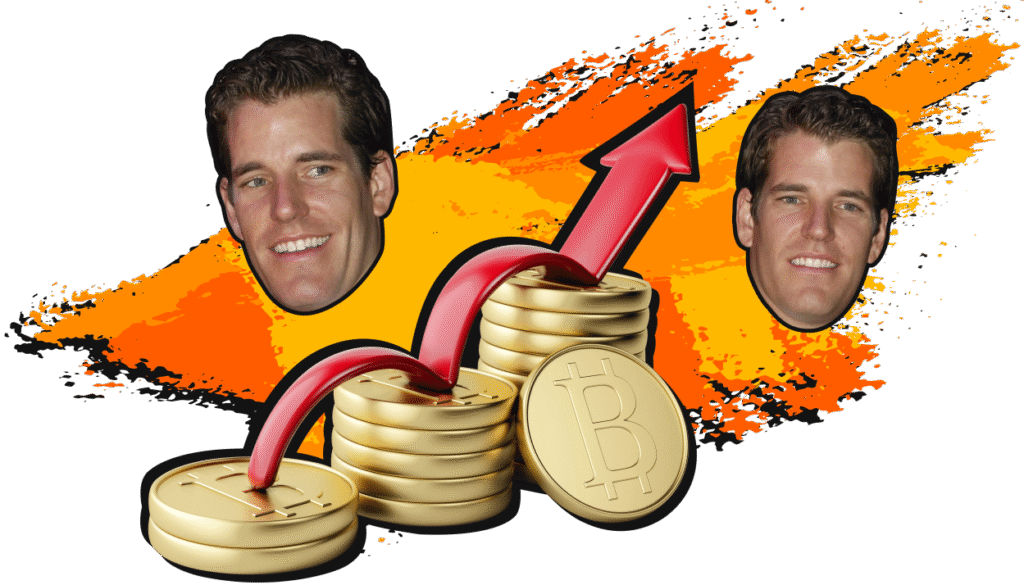
The story of Bitcoin’s price suppression began in 2013 with two familiar faces in the tech world: Cameron and Tyler Winklevoss. Known mostly for their legal skirmishes with Mark Zuckerberg over Facebook, the twins had found a new passion in Bitcoin. They were early adopters, and their ambition was clear: to launch the world’s first Bitcoin exchange-traded fund (ETF).
Their efforts to bring legitimacy to Bitcoin faced an immovable obstacle—the U.S. Securities and Exchange Commission (SEC). Despite their resources and connections, the SEC repeatedly denied their ETF applications. Bitcoin, they argued, was too volatile, too risky, and too immature to offer to institutional investors. The twins were crushed, but their disappointment quickly turned into a new drive: if they couldn’t get the ETF through the front door, they would force their way in by manipulating Bitcoin itself.
By the time they approached me, their frustration had become a single-minded obsession. They didn’t just want an ETF anymore; they wanted to control the very thing that had stood in their way—Bitcoin. They were tired of lobbying and getting nowhere. They wanted action. And that’s where I came in.
The ETF Rejections
In 2013, Bitcoin was still in its infancy as a financial asset, known only to a niche group of tech enthusiasts, libertarians, and some forward-thinking investors. For the Winklevoss twins, Bitcoin represented the future of money—a new kind of gold that could revolutionize global finance. Their goal was to legitimize it in the eyes of Wall Street and bring it to institutional investors through an ETF.
An ETF would allow mainstream investors to gain exposure to Bitcoin without needing to deal with the complexities of owning it directly. It would bridge the gap between Bitcoin and the financial mainstream, making the digital asset accessible to everyday investors. However, the SEC was not convinced. They cited concerns about market manipulation, lack of liquidity, and the risks associated with such a volatile asset.
These repeated rejections were more than just bureaucratic setbacks. Each denial was a public failure that chipped away at the twins’ vision. They began to see the SEC’s rejections not as a matter of Bitcoin’s immaturity, but as a deeper fear—fear of the decentralized, uncontrollable future that Bitcoin represented. For the SEC, Bitcoin’s volatility was its greatest flaw. For the Winklevoss twins, this very flaw became the key to forcing the SEC’s hand.
Frustration Turns to Strategy
When Cameron and Tyler came to me, they were angry—angry at the SEC, angry at the system, and angry at how long it was taking for Bitcoin to be recognized for what they believed it could be. I could see that they needed more than just a financial advisor. They needed someone who could turn their frustration into a long-term strategy.
They didn’t need to convince the SEC that Bitcoin was safe; they needed to create a scenario in which the SEC had no choice but to approve the ETF. The key to that was controlling Bitcoin’s volatility, the very thing the regulators feared most. If we could suppress the price and generate the kind of wild swings that made institutional investors nervous, the SEC would have no choice but to regulate the market. And once regulated, Bitcoin would finally be legitimized—and their ETF could be approved.
Our strategy was built on a simple but powerful idea: Bitcoin’s volatility was both its strength and its Achilles heel. By amplifying its swings, we could create chaos and sow uncertainty, making Bitcoin seem too dangerous to be left unchecked. The twins had the capital to make large moves in the market, but they needed someone like me who understood how to manipulate it on both sides—buying and selling in ways that would create the exact kind of price action we needed.
This is ironic because I was initially hired to create the perfect scenarios for wild swings, and fast forward to 2021, I, along with others, were and still are part of the network or “gang” that keeps the price below 60k. However, my preference has always been 58k.
Crafting a Calculated Partnership
Anyway, the partnership between the Winklevoss twins and me wasn’t just about financial gain. We were aligned in broader goals: they wanted their ETF approved, and I saw an opportunity to control a nascent market. Our relationship wasn’t focused on quick profits, but on building a system that allowed us to manipulate Bitcoin’s price from behind the scenes. This would give us the power to influence not only the price of Bitcoin but also its narrative within the financial world and what is now known as “Bitcoin Twitter” (nobody calls it Bitcoin X—that’s stupid).
We started small, testing the waters. Using a network of exchanges and over-the-counter desks, we began accumulating Bitcoin—but we didn’t hold it for long. Instead, we dumped large amounts onto the market in quick, coordinated bursts, causing the price to plummet. As the price crashed, we swooped back in, buying at the lows, only to repeat the process. The volatility we created wasn’t a coincidence—it was a deliberate tactic designed to keep Bitcoin unstable.
As we manipulated the market, it became clear how paranoid some Bitcoiners were about security. People were going to extreme lengths to protect their private keys, driven by fear of hackers or theft. The twins also embraced this paranoia. I remember them telling me how they printed their seed phrase and then destroyed the printer with a baseball bat, thinking it would prevent any digital remnants from being hacked. Honestly, it was a ridiculous idea. They would’ve been better off just writing it down and storing it in their father’s $107 million bunker in New Zealand. Simple, secure, and without the unnecessary theatrics.
At first, the public saw this as typical market behavior. Bitcoin was notorious for its wild price swings, so few questioned the source of the chaos. But every crash we triggered, every sell-off, was part of a larger plan. We weren’t just moving the price—we were shaping the market. By keeping Bitcoin volatile and unpredictable, we made it clear to institutional investors and regulators that this was an asset they couldn’t trust.
Forcing the SEC’s Hand
As the months passed, our manipulation of Bitcoin became more sophisticated. We weren’t just pumping and shorting Bitcoin for quick gains—we were playing the long game. The goal was to keep Bitcoin suppressed at critical moments, especially when there were whispers that the SEC might reconsider the ETF. Every time Bitcoin’s price started to rise, we would step in and hammer it back down, ensuring that Bitcoin remained too volatile for mainstream adoption.
We also knew we had to control the narrative. It wasn’t enough to move the price; we had to shape the public perception of Bitcoin. Through carefully placed media articles, social media posts, and influential voices in the financial community, we amplified the fears surrounding Bitcoin’s volatility. We wanted the market to believe that Bitcoin was a ticking time bomb—too risky for institutional investors, and too unstable for ordinary people.
Every price drop, every market crash was framed as a cautionary tale. Bitcoin was a speculative bubble, a dangerous gamble for those foolish enough to invest in it. And without an ETF to bring stability, it could never be trusted. The idea was simple: if we could make Bitcoin look like a threat, regulators would be forced to step in and stabilize the market. And once the market was stable, the twins’ ETF could finally be approved.
Playing the Long Game
By late 2013, Bitcoin was still widely regarded as a speculative asset, especially due to its recent meteoric rise. However, we had already planted the seeds of price manipulation to make it appear like a bubble (which it was). The timing was perfect, especially with external events fueling the narrative.
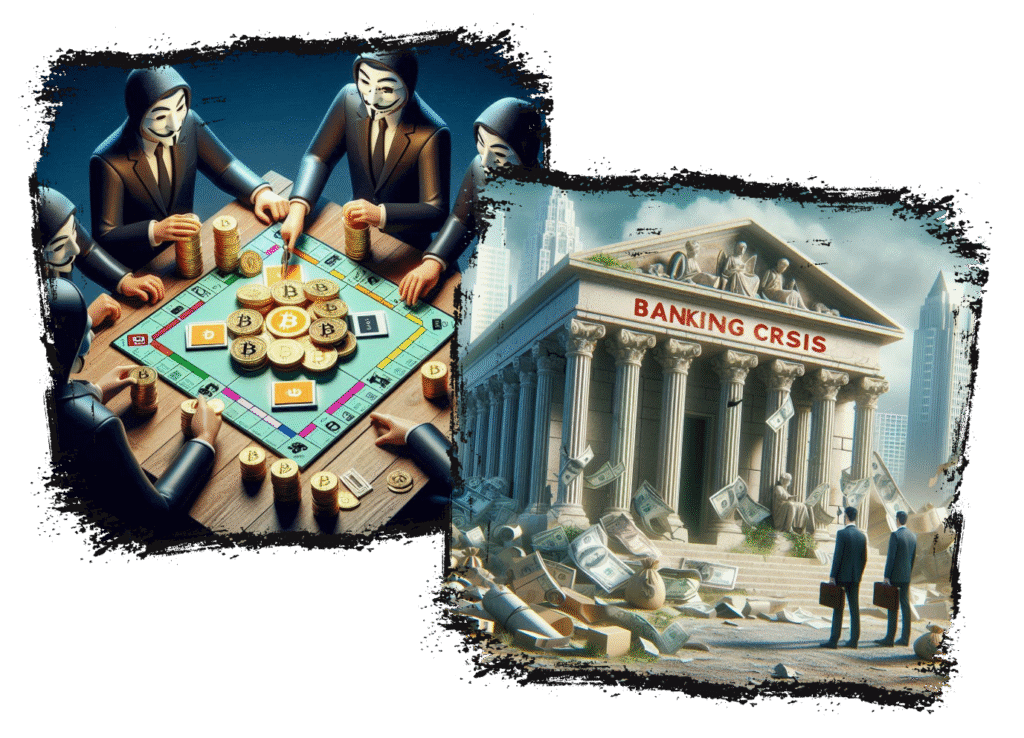
The Cyprus banking crisis in March, where the government implemented a clawback on bank customer funds, sparked widespread fear of financial instability. People began to realize the vulnerability of traditional banking systems, and Bitcoin emerged as a potential safe haven.
We used this opportunity to pump the price up quickly, feeding on the panic and uncertainty that rippled through Europe and beyond. The narrative was simple: Bitcoin was the answer to corrupt and unstable financial institutions. We played into this fear, driving demand higher, inflating the price in a way that felt inevitable. But behind the scenes, we knew this was temporary.
What had started as an effort to push the ETF forward had evolved into something much larger. The twins began to see Bitcoin not just as a means to an end but as an asset they could control. The idea of price suppression was no longer just about getting the ETF approved—it was about power. Once we had pumped the price high enough, we started working on the second phase of the plan: a long, drawn-out bear market.
Over the next two years, we systematically brought the price down, creating a prolonged bear market that would wear down even the most bullish of hodlers. This wasn’t just a market correction—it was engineered. Our manipulation aimed to keep Bitcoin unstable and unpredictable, further entrenching the notion that an ETF, along with regulatory oversight, was the only way to stabilize this volatile asset.
If we could control Bitcoin’s price, we could control its future. And if we could control Bitcoin’s future, we could control the future of finance as a whole. But this was only the beginning. The market was growing, and the opposition was, too. Governments, regulators, and other financial institutions were starting to take notice. The game was about to get much bigger, and the stakes were rising.
For now, though, we were content to keep Bitcoin in check, quietly pulling the strings behind the scenes. The suppression (up and down) had begun, and there was no turning back.

The Vision of Control
The Winklevoss twins had originally envisioned Bitcoin as a way to democratize finance. But as we continued to manipulate the market, their vision evolved into something more complex. They didn’t just want to bring Bitcoin to the masses—they wanted to control how and when that would happen. With every manipulated price movement, they tightened their grip on the future of Bitcoin.
We had set the wheels in motion. Bitcoin was still volatile, still unpredictable, but behind the chaos was a carefully orchestrated plan. The public saw it as a natural part of the market, a consequence of Bitcoin’s immaturity. But we knew the truth. Every rise and fall, every crash and rally, was part of a broader strategy to keep Bitcoin in a state of controlled chaos.
And while the world was watching, waiting for Bitcoin to either fail or succeed, we were the ones writing the script. The game had only just begun.
Note from Stackchain Magazine: No Bitcoin (or inferior monies) were exchanged for this article. This article was written by Deniz 58k, 58k gang supporter and Editor at @BTCTimescom. you can find Deniz on X @SatoshiDeniz on Nostr 58k@nodeless.io. If you’d like to send Surf some 丰 for the article you can do so via LNURL groggypoint37@walletofsatoshi.com